


With the professionalization of nursing, given the Crimean War (1853-1856), nursing associations and schools arose. For example, the Red Cross or the Collegiate Nursing Organization. And this is how their clothing adapted to the social situation of each era.
History of Nurse Scrubs
In the Middle Ages, the Scrubs nursing consisted of a black habit, a white strapless apron and a cap (white headdress), shaped like wings.
Scrubs 17th century nurse
In the 17th century, the scrub former nurse underwent this transformation:
- The black habit changed for a gray dress.
- The white apron for a dark apron.
- The cap became tip shape.
Their clothing did not respond to functionality, but to the command of not showing skin which, in the eyes of the Lord, was a sin.
Scrubs 19th century nurse
During the 19th century, the vocation for nursing expanded and many women aroused interest in medicine, although few had access to education.
At this time, they used black or dark blue maid attire, a white bib-type apron and cap.
The outfit of the first nurse, a heroine
In 1854, British soldiers wounded during the Crimean War professed great devotion to the “lady in chief.” Florence Nightingale played a key role in the professionalization of nursing. Furthermore, she was a pioneer in changing the scrub old nurse - although it preserved that resemblance to religious clothing -.
This outfit was based on:
- A skirt: gray and quite long.
- A jacket: velvet, which left the cuffs and collar of the blouse exposed.
- A cap: for the head.
History remembers Florence Nightingale as the mother of modern nursing.
By the way, at this time, The Red Cross used a white apron with its logo, which it also incorporated into the cap.
Scrubs nurse 1910
Nurses in the early 1900s wore:
- A white dress: synonymous with hygiene; long to the feet, with a V-neck.
- A white bib: that covered them up to the waist.
The First World War caused nursing clothing to change decorum for efficiency. Therefore, pockets and sleeves were added to facilitate movement.
scrub 20's nurse
After the war, as is normal, no woman wanted to return to the scrub old nurse so annoying from the previous decade. Therefore, they began to carry a simple white dress, which reached their ankles.
The scrub of a nurse from the 1920s is the basis of that of our days.
scrub 30's nurse
During the 1930s, there were white dresses with collar and caps, accompanied by white pantyhose. In the 50s, the scrub It adapted to the style of the decade: the skirts and sleeves of the robes became shorterThey were even disassembled and fastened with brackets to the shoulder. Likewise, folded paper caps replaced the cloth caps of the First World War.
scrub 40's nurse
In the mid-1940s, nursing attire became much simpler. She decreased the length of the apron and raised the hem of the iba skirt (in the style of the women of the day). Thus, washing contaminated clothing, to prevent the spread of diseases, was a much simpler task.
scrub 50's nurse
Many nurses replaced their usual suits with ones pants and jacket sets.
scrub nurse from the 60s
In the 1960s, the medical community concluded that the combination of white Scrubs and the hospital lights caused eye fatigue. So they changed their white suits for Scrubs green or blue tones. In this way, they minimized fatigue during their work day.
scrub nurse from the 70s
In the 70s, the scrub As a nurse, she disassociated herself from her religious and warlike past. What does this mean? In two words: goodbye cap!
scrub nurse from the 80s and 90s
The Scrubs nursing they started to look like everyday clothes.
In the 1980s, open-necked shirts and pants gained popularity, as men joined as nurses.
And finally, nurses could stop wearing heels and wear comfortable medical shoes.
Scrubs currently a nurse
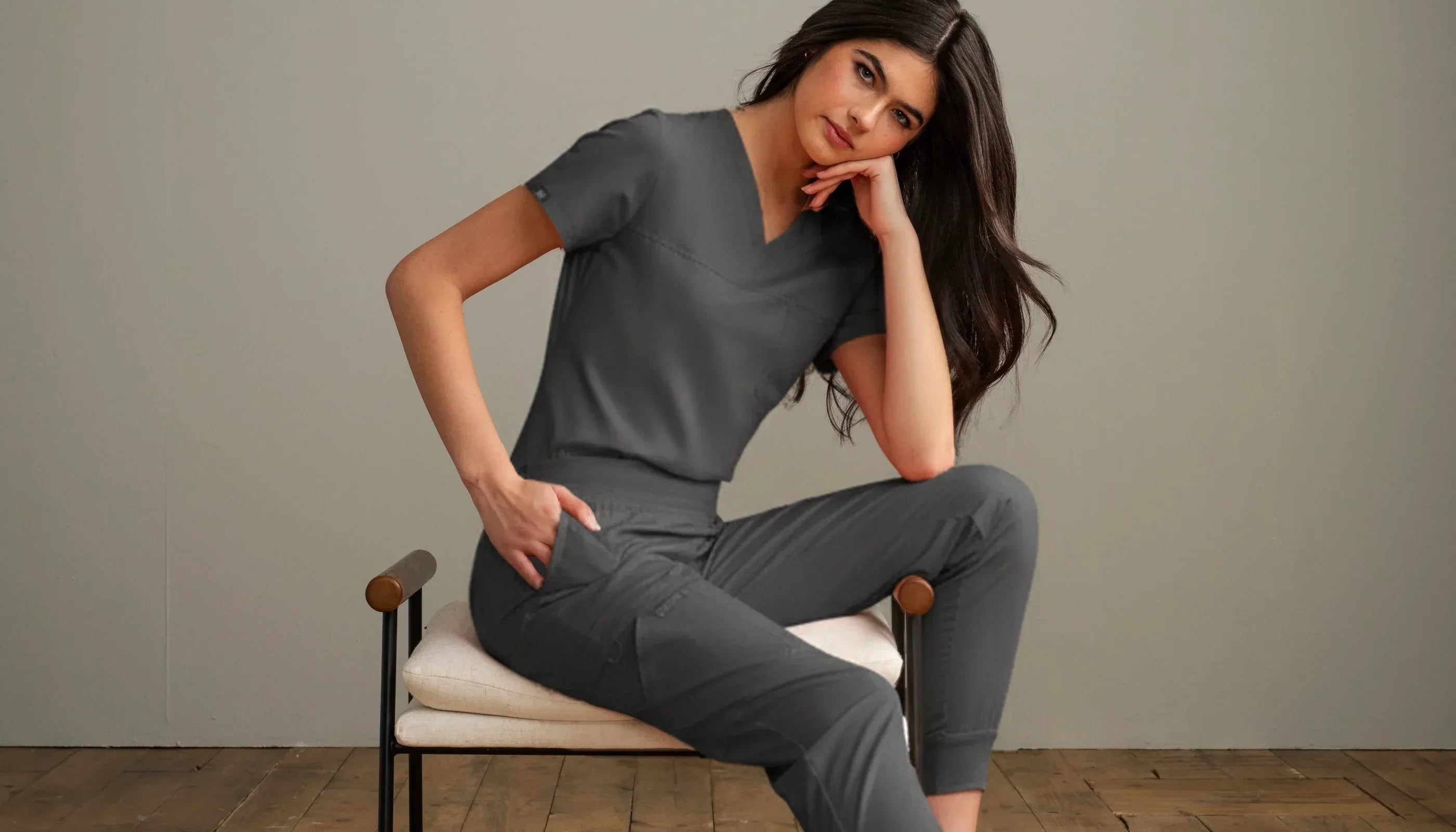
Since the 90s, the scrub The old nurse uniform has been replaced by the cloth suits that we see in most hospitals in Europe and the United States. These are available in multitude of styles, designs, fabrics, colors and prints.
It is currently understood that carrying scrub sanitary is synonymous with wearing a Top and pants that are the same color, and that are comfortable with breathable and elastic fabrics. Health workers, dentists, veterinarians, nurses and nurses spend many hours caring for patients and need to work with complete freedom of movement and confidence.


